A Sissinghurst Thread.
We bought Tanyards for the garden. Not because it was “perfect” in the modern sense, but because it felt lived in: mature trees shaped by time, gnarled by the seasons, aged and patinated. The outside space had meandering paths; transitions. Quiet passages leading to secret corners.
The house was another story. It needed work. A lot of work. So we lived with sub-standard heating, a tiny cooker that blew the household fuse every time we turned on two hobs at once, and an ancient Aga that sort of heated the water when it felt like it—but at least gave us decent toast. The garden was our justification and our joy.
We worked tirelessly over 30 years to restore the house and return it to what we felt was a comfortable and welcoming family home. But not long after we finished, it became painfully apparent that the property was now too large for us. Family had dispersed. Parents were no longer with us. The house needed life. The garden needed children. And after 30+ years in one place—probably enough for anyone—we decided it was time to pass it on to the next generation.
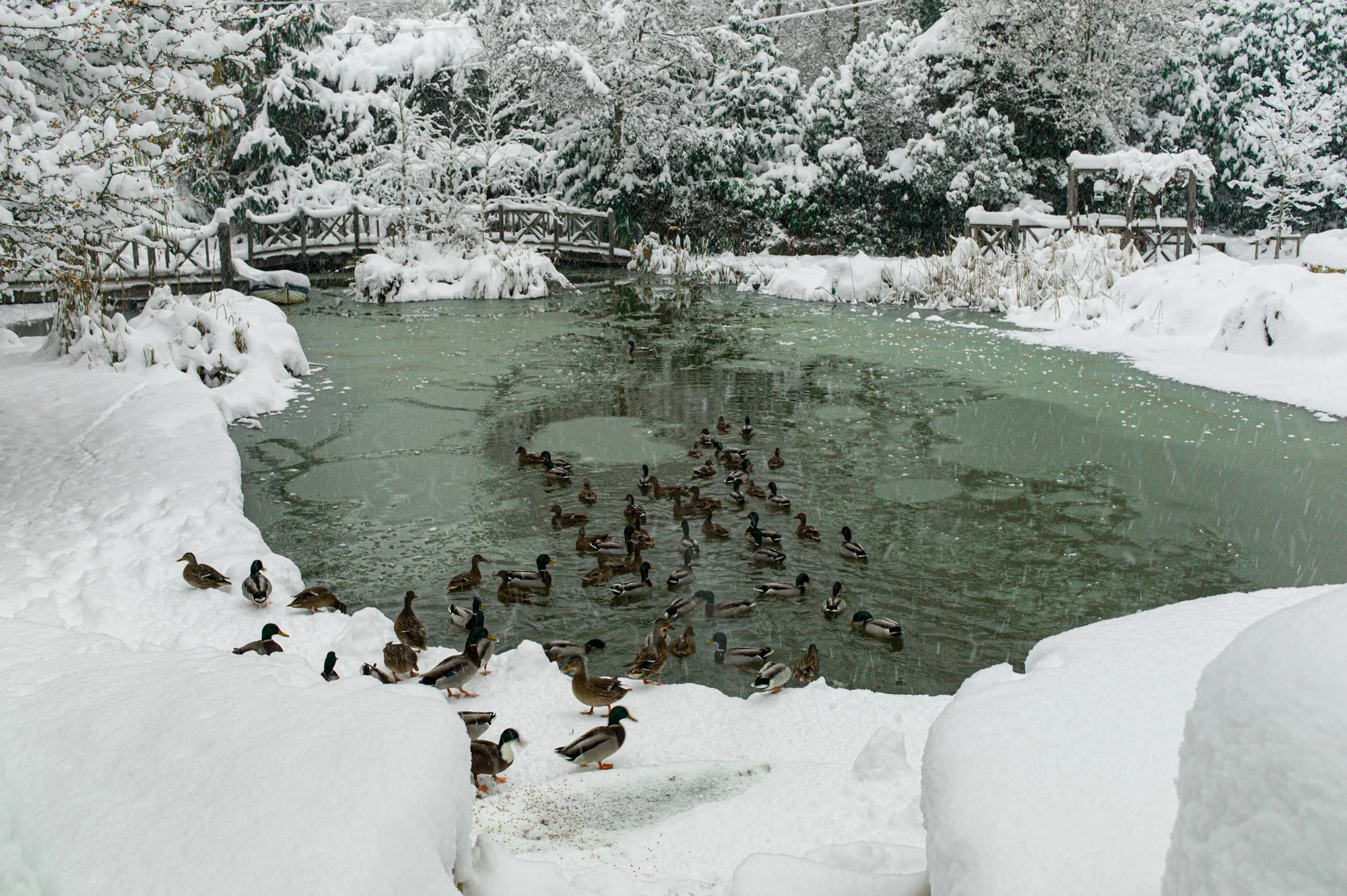
We put Tanyards on the market at the worst possible time. The market had faltered, prices had softened, and there was huge uncertainty around the Budget in late 2025. So began an extremely frustrating and emotional journey as we tried to put a value on the home we had loved and cherished for so long. And then, just before Christmas, we learned something that made the place feel connected to an altogether bigger story.
William Wilmshurst and 1925.
We discovered that in 1925, Tanyards was purchased by a Mr William Wilmshurst—a name we didn’t know at all, until we were contacted by his great-great-great grandson, Tom Dawson, who is researching his family history. A gardener himself—at Charleston no less—Tom had uncovered a link to another famous garden narrative.
Because William Wilmshurst is also the man who bought Sissinghurst Castle, with the intention of restoring and developing the gardens there.
That detail quietly delighted us. It doesn’t, of course, redefine Tanyards, but it gives it us a pleasing thread of continuity. We chose the house for the garden, and there’s something rather wonderful in the idea that the person who owned it over a hundred years ago clearly felt the same connection.
Sadly, William died not long after acquiring Sissinghurst, before he could do very much with it. It remained in limbo for a few years and was then purchased in 1930 by Vita Sackville-West and Harold Nicolson, who would go on to transform it into the garden most people know today.
When Tom got in touch he also mentioned that he had been in contact with another member of the Wilmshurst family, and that they are a bit put out by the common assumption that Sissinghurst was derelict before Vita and Harold arrived. Their view is simple: work had begun. The story didn’t start from nothing.
Perhaps the most intriguing detail of all, for us as custodians of this special house is the fact that William retained ownership of Tanyards even after he bought Sissinghurst. Which means, for a time, these two properties were linked not just by narrative, but by ownership—by one person holding both, tending two gardens.
I’m not telling this story to “borrow prestige.” Tanyards doesn’t need it. The garden is compelling on its own terms, and the atmosphere of the house—its calm, its depth, its sense of retreat—doesn’t depend on anyone else’s name. But there is something quietly moving about realising that properties are not isolated. We don’t always discover the history but we know they are part of a continuum: of people who cared, people who planted, people who made choices whose effects outlast them.
It is also a reminder that history isn’t always neat. Famous narratives simplify. But gardens cannot be neatly contained in such a way. They are a result of accumulations. Edits. Revisions. Layers you can’t always see. Beginnings that don’t get finished, and then other hands that take over. All we saw were mature trees that would take decades–if not hundreds–of years to create from scratch.
We fell for a garden and have loved it over 30 years. We are looking forward to welcoming William’s descendant to Tanyards. Not as a statement or a badge of honour but as a continuing conversation: about what was here, what might have been imagined, what was started, what was left, and what continues.
Sometimes a house is just a house. Sometimes a garden is just a garden. And sometimes, if you’re lucky, you learn that what you’re living with has been part of a longer chain of care than you could ever have imagined.