In Praise of Shadows
“We Orientals tend to seek our satisfactions in whatever surroundings we happen to find ourselves, to content ourselves with things as they are; and so darkness causes us no discontent, we resign ourselves to it as inevitable. If light is scarce, then light is scarce; we will immerse ourselves in the darkness and there discover its own particular beauty. But the progressive Westerner is determined always to better his lot. From candle to oil lamp, oil lamp to gaslight, gaslight to electric light—his quest for a brighter light never ceases, he spares no pains to eradicate even the minutest shadow.”
― Junichirō Tanizaki, In Praise of Shadows
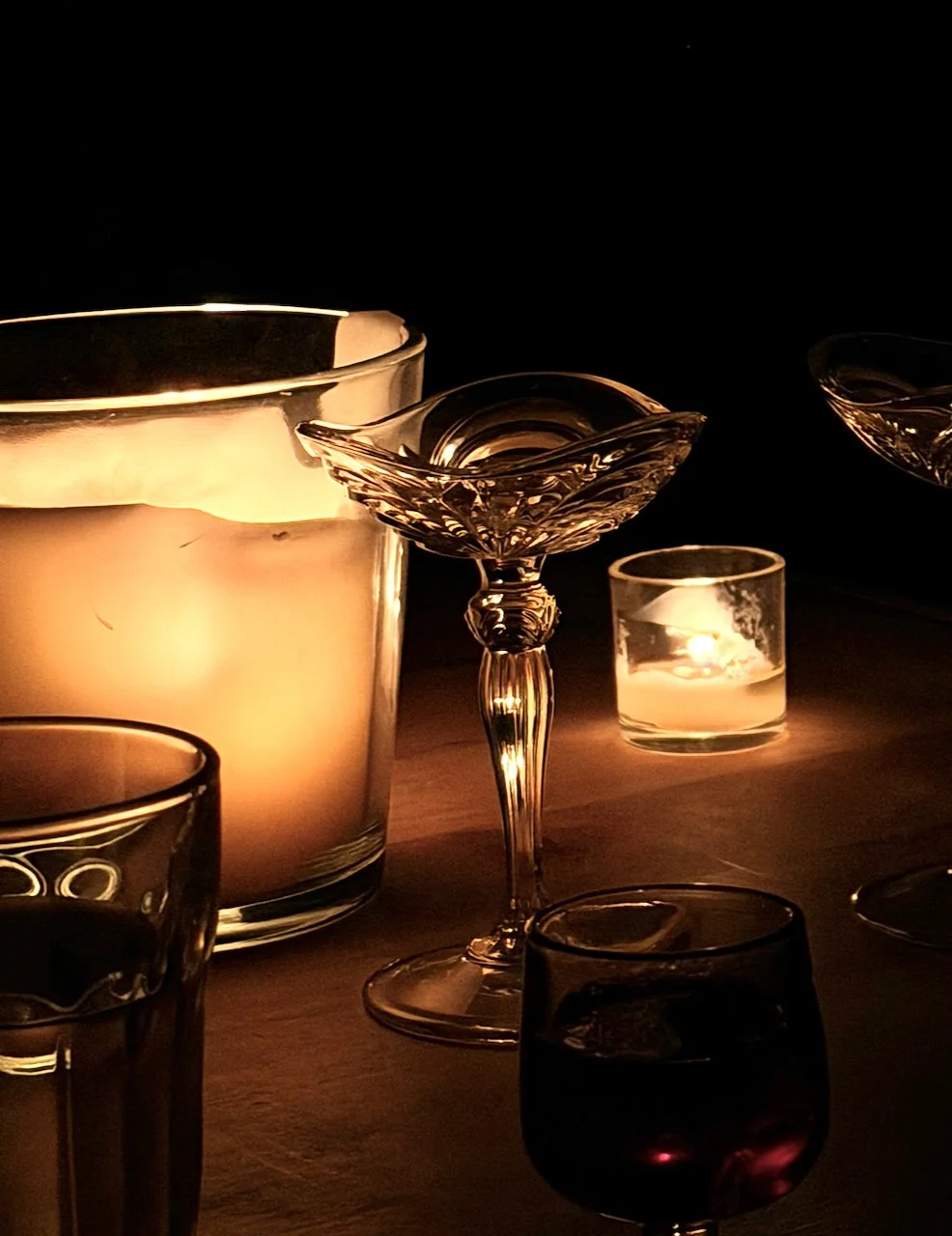
What is it, this modern obsession with blasting every surface into visibility, as if atmosphere is a design flaw? As if a home should behave like a showroom: evenly lit, uniformly legible, stripped of mystery. We’ve started treating shadow like a mistake — something to eradicate with recessed LEDs and bright minimalism. But some spaces don’t want to be exposed. They want to be felt.
Jun’ichirō Tanizaki’s In Praise of Shadows is one of the most beautiful defences of this idea. Written as an essay on Japanese aesthetics, it argues — quietly, yet insistently — that shadows are not the enemy of beauty. They are one of its most powerful tools. Tanizaki certainly isn’t advocating gloom. He’s pointing to something subtler: that the experience of a room comes not from dazzling brightness, but from a careful relationship between light and dark. Not everything needs to announce itself.
His point, really, is that shadow isn’t the absence of beauty — it’s the medium that reveals it.
Soft light doesn’t just “make things dim”; it gives objects depth, weight, and mystery. It lets the integrity of the materials speak. Perhaps the patinated plaster has a gentle bloom. The richness of old wood deepens in low light . Paint shows its texture instead of shouting out a colour. Curves become curves because they fade, rather than being traced in harsh clarity.
When you flood a room with uniform light, everything takes centre stage. The eye has nowhere to settle. There is no hierarchy. We might say It’s the visual equivalent of someone speaking too loudly for too long.
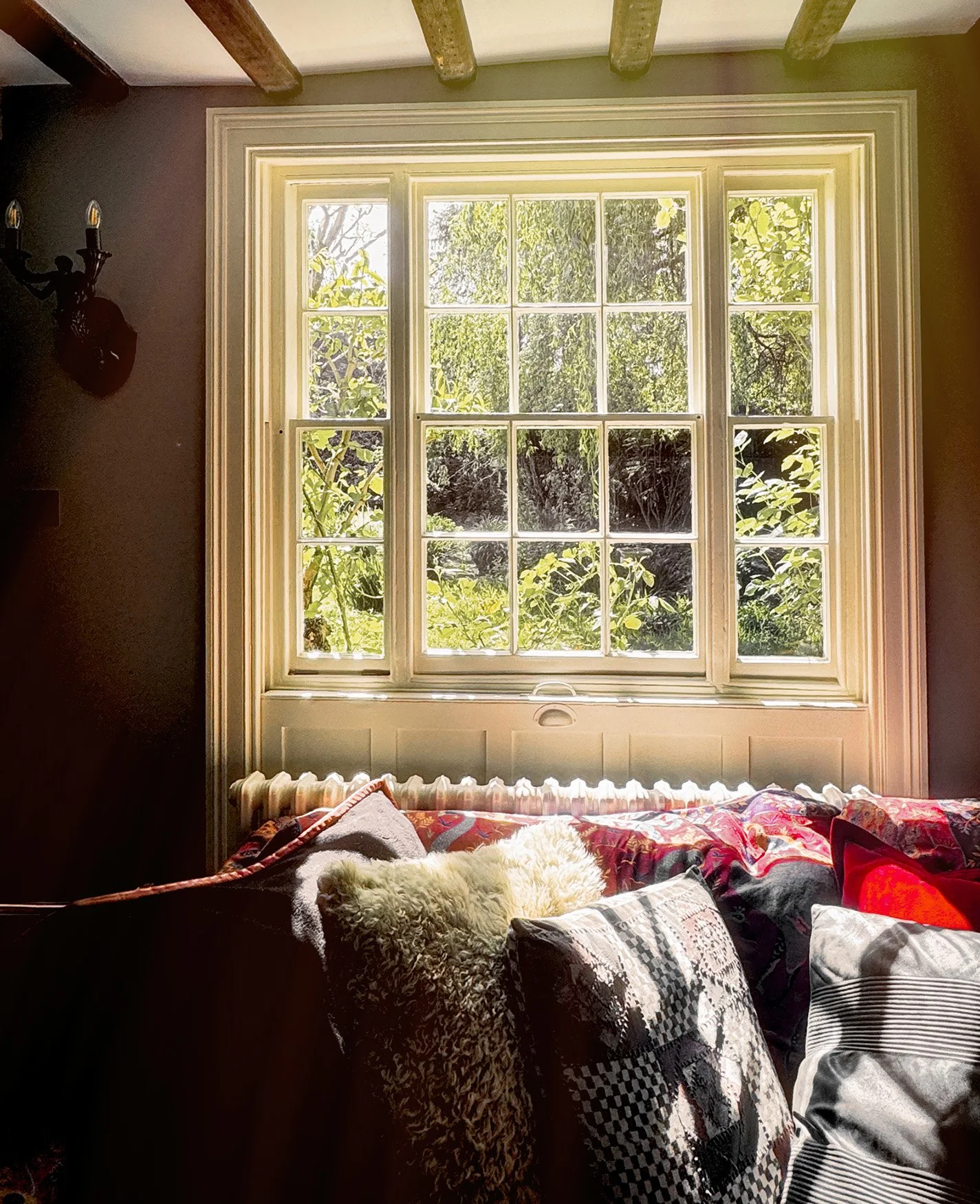
Old houses — good old houses — need shadow. Not because they are poorly designed, but because they were built with a different kind of aesthetic: thick walls, thresholds, small shifts in level, spaces that don’t feel the need to reveal themselves all at once. Their architecture understands the pleasure of subtlety: the way a hallway can lead you into light, the way a door can frame a room, the way a corner can hold a sense of quiet.
Those dark corners aren’t “dead space.” They are punctuation. They are the hush between sentences. The rest between two notes. Without them, the brighter parts don’t feel bright — they just feel exposed.
There’s something emotionally true about this too. Bright, constant light can feel like a demand: performative, relentless, invasive. It leaves no room for privacy — not just physical privacy, but psychological privacy. Shadow is comfort. It’s intimacy. It’s a room allowing you to retreat.
And once you notice this, you start seeing how many of our modern renovations look the same. Any hint of variation is flattened, mystery and uncertainty is eliminated, making every surface shine. But surely, perfection was never the goal? If we chase brightness and clarity we end up losing character. We remove the very conditions in which give a house its soul.
The subdued passage, the candle-lit nook, the darker edges of a room — they really aren’t problems to fix. They’re where the house keeps its secrets. They’re where atmosphere lives. Where the candlelight flickers.
In an old house, shadow isn’t a flaw. It’s one of the pleasures.